

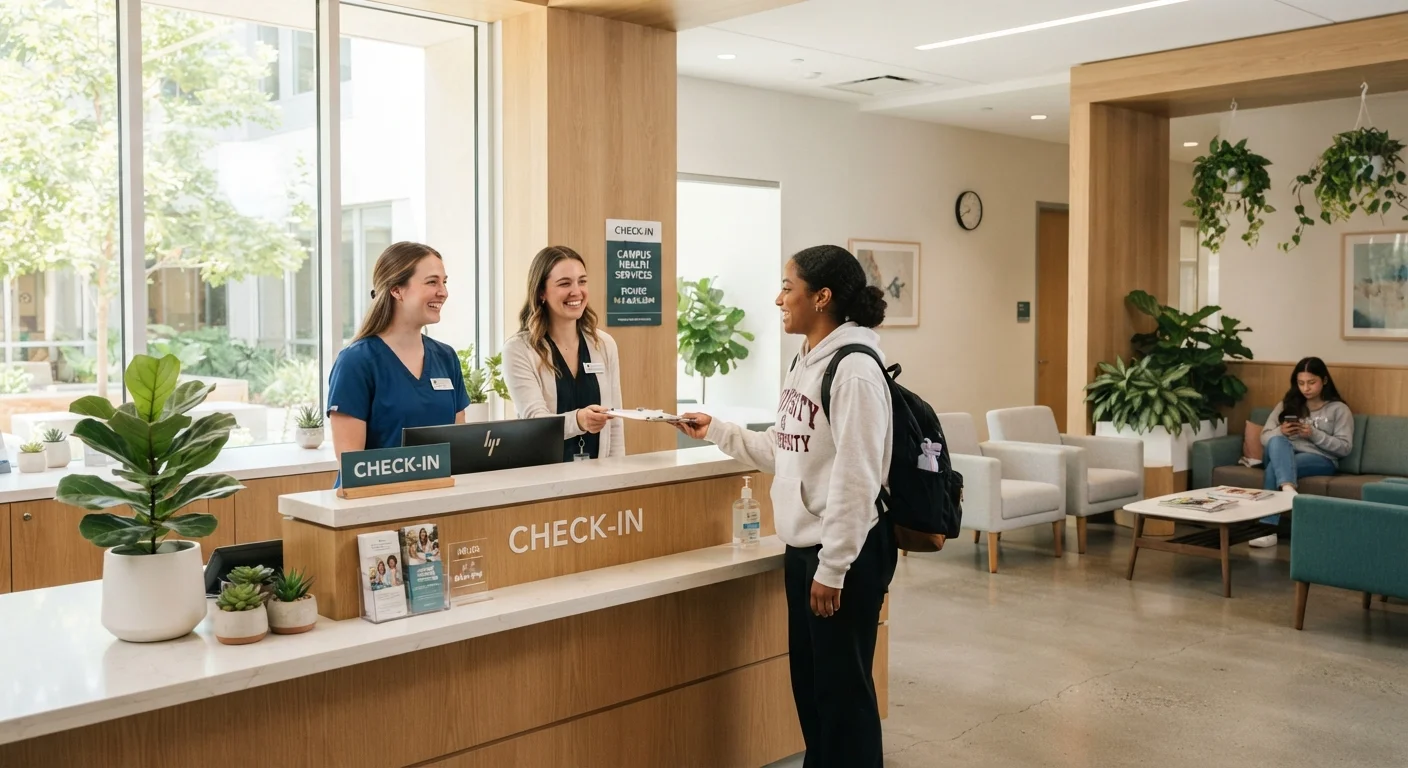
More Than a Place to Pick Up Cold Medicine
For many first-year students, the campus health centre registers as a last resort - somewhere to go when a sore throat has lasted too long or a stomach bug won't quit. That narrow view means most students leave an entire suite of resources completely untouched.
Student health centres at most US colleges and universities function closer to a primary care practice than a first-aid station. They are staffed by licensed clinicians - physicians, nurse practitioners, and physician assistants - who can assess, diagnose, order labs, prescribe medications, and coordinate referrals. The scope is broad by design, because students' health needs are broad.
Understanding what is actually available to you is the first step toward using it. This article maps out the full picture so you can make informed decisions about your own care throughout your college years.
Services Vary by Institution
Not every campus health centre offers the same range of services. Smaller colleges may have more limited on-site capacity but will typically provide referrals. Always check your specific school's health centre website for its current list of available services and hours.
Preventive Care: The Most Underused Service Category
Preventive care is the category students overlook most - partly because it does not feel urgent, and partly because no one told them it was available. Common preventive services at campus health centres include:
- Vaccinations - flu shots, meningitis vaccines, HPV series, and boosters required for campus housing
- Screenings - blood pressure, cholesterol, diabetes risk, vision, and hearing checks
- Sexual health services - STI testing, contraception counselling, and PrEP referrals
- Routine physical exams - useful for athletic clearance, study-abroad requirements, or general wellness
These appointments exist specifically so that small concerns are caught before they become large ones. You can learn more in our reference on preventive care available through campus health services.
60%+
Students reporting mental health struggles in college
The American College Health Association's National College Health Assessment has consistently found that a majority of students report significant psychological distress during their college years.
~50%
Students who rarely or never use campus health services
Research published in the Journal of American College Health has found that many enrolled students do not utilize available campus health resources, even when covered by a mandatory fee.
Mental Health Referrals and Wellness Support
Mental health is one of the most significant concerns on college campuses, and student health centres are a common first point of contact. Depending on your institution, the centre may offer:
- Initial mental health screenings and risk assessments
- Warm referrals to campus counselling or psychiatry services
- Short-term counselling sessions on-site
- Crisis resources and coordination with campus emergency services
If you are not sure whether what you are experiencing rises to the level of "needing help," a health centre clinician can help you figure that out - without judgment. That conversation is confidential. For a broader look at what campus mental health services typically include, see our guide to mental health services at your campus health center and the Mental Health hub for related resources.
If you are not sure how to raise a sensitive topic with a provider, our article on raising sensitive health topics at the campus clinic offers practical guidance.
Schedule a Wellness Visit Early in the Semester
The best time to establish a relationship with campus health is before you need urgent care. Booking a non-urgent wellness appointment at the start of the year means you already know the process, have your records on file, and are not navigating it for the first time when you are feeling unwell.
What to Do Before Your First Visit
You do not need a specific complaint to schedule an appointment. Here is how to approach your first visit with confidence:
- Check your school's health portal - most centres use an online system for appointments, forms, and lab results.
- Review what your student health fee covers - many visits and services cost you nothing extra beyond what you already pay each semester.
- Bring your student ID and insurance card - even if you are covered by the school plan, having both on hand avoids delays.
- Write down your questions in advance - clinicians can address more in a single visit when you arrive prepared.
If you want to know exactly what to expect once you walk through the door, our article Walking Into the Student Health Center for the First Time walks through the entire process from check-in to discharge. And if you have heard things about campus health that gave you pause - privacy concerns, care quality, or who can access your records - common myths about student health centers, addressed clears up the most persistent misconceptions.
This article is for general informational and educational purposes only and is not a substitute for professional medical advice, diagnosis, or treatment. Always consult a qualified healthcare provider with questions about your individual health.
Frequently Asked Questions
No. Student health centres welcome students for preventive care, wellness check-ins, vaccinations, and general health questions - not only acute illness. Scheduling a routine appointment is encouraged even when you feel fine.
Generally, no. Once you are 18, your health records are protected under federal HIPAA privacy rules and, at most institutions, FERPA. Providers cannot share your information with parents or faculty without your written consent, except in specific safety-related circumstances.
Many student health centres offer initial mental health screenings, referrals to campus counselling services, and sometimes short-term counselling on-site. Psychiatry and crisis support are also available at some institutions. See our <a href="/campus-health/campus-health-services/mental-health-services-at-your-campus-health-center">overview of mental health services at campus health</a> for more detail.
Not necessarily. Campus health providers are licensed professionals who can diagnose conditions, order lab work, prescribe medications, and provide referrals to specialists. For a full breakdown, see <a href="/campus-health/campus-health-services/what-a-student-health-center-actually-does">what a student health center actually does</a>.
Check your school's student health website or contact the centre directly. Many services - including routine visits, some lab tests, and preventive care - are bundled into the mandatory fee most students already pay. Our article on <a href="/campus-health/campus-health-services/services-already-included-in-your-student-health-fee">services included in your student health fee</a> walks through what is typically covered.
If you have a serious injury, severe chest pain, difficulty breathing, or any emergency, go to the ER or call 911. Urgent care is a good middle option for issues that need same-day attention but are not life-threatening. Our guide on <a href="/campus-health/campus-health-services/campus-health-center-vs-urgent-care-vs-emergency-room">campus health vs. urgent care vs. the ER</a> explains when to use each.
The content provided on our blog site traverses numerous categories, offering readers valuable and practical information. Readers can use the editorial team’s research and data to gain more insights into their topics of interest. However, they are requested not to treat the articles as conclusive. The website team cannot be held responsible for differences in data or inaccuracies found across other platforms. Please also note that the site might also miss out on various schemes and offers available that the readers may find more beneficial than the ones we cover.